Skip to content
3D architectural render of the Pax Silica entrance and tech hub in Capas and New Clark City, Tarlac.
Computer Professionals' Union

Computer Professionals' Union

The Philippines is not for sale.

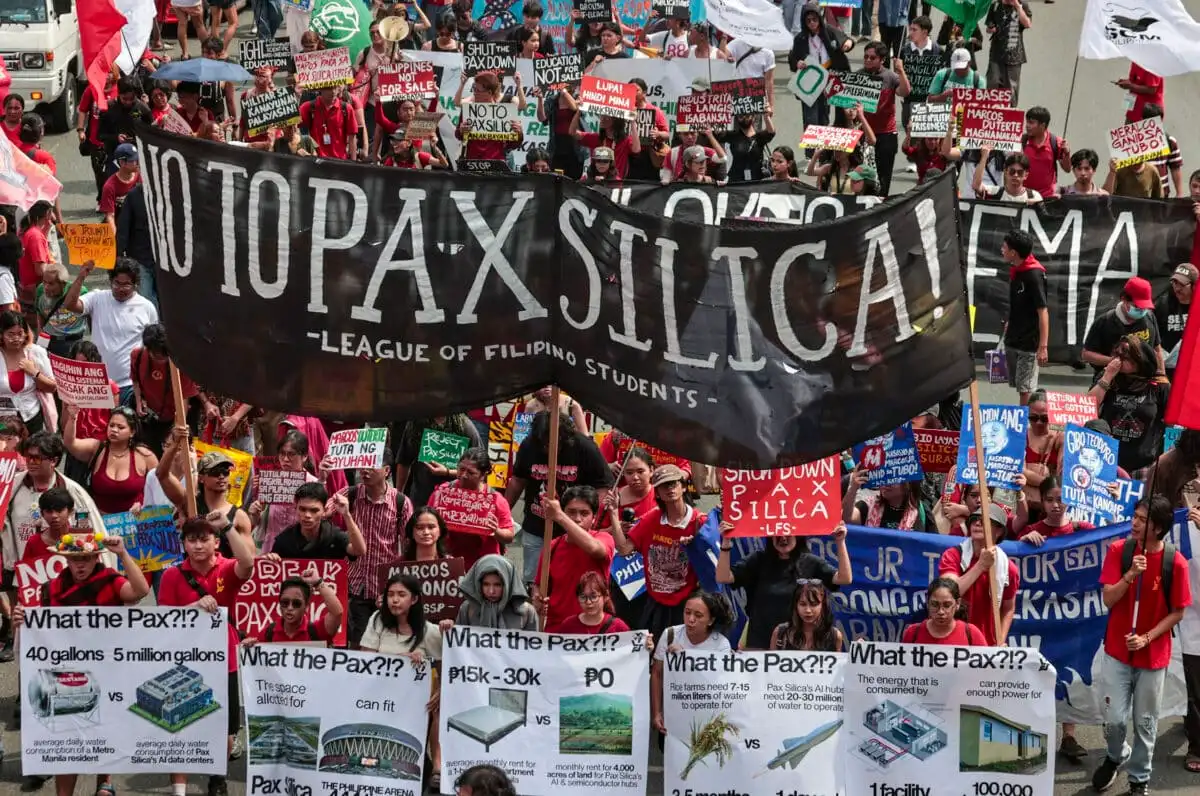
No to Pax Silica!

Oppose Pax Silica! Fight for national industrialization and genuine agrarian reform! Trump Out!

Not for Filipinos, but for foreigners.

A US-led initiative that wants to turn 1,620 hectares of Filipino land to its own strategic economic zone for AI and semiconductor manufacturing. Here is why we must oppose it.

What is Pax Silica?

Pax Silica is a United States-led initiative that aims to control the global semiconductor and artificial intelligence chain — from mineral extraction and processing, chip and semiconductor fabrication, data centers, advanced hardware and all other technological infrastructure needed for artificial intelligence. The initiative was launched as a bid by the US to outmaneuver China’s near-monopoly in the semiconductor supply chain and beat America’s biggest rival in the AI race.

Read more · 3 paragraphs

The initiative was joined by a host of countries such as Japan, Israel, Australia, the European Union, Germany, South Korea, the United Arab Emirates. The Philippines joined in April 2026.

The United States and the Marcos regime announced that Pax Silica will manifest itself in the Philippines through a 4,000 acre (about 1,620 hectare) AI-native industrial hub in New Clark City, Tarlac, within the Luzon Economic Corridor, designating it as the first Pax Silica “Economic Security Zone.” For industrialized countries like Japan and South Korea, they get to handle high-value industries such as memory chip production, semiconductor design and AI development. For backwards countries including the Philippines, our primary role is supplying and processing critical minerals.

The final Pax Silica master agreement is expected to be signed on November 16, 2026 — the day Donald Trump visits the Philippines for the ASEAN Summit in Metro Manila. This is being rushed despite the many different concerns being raised by multiple sectors in the Philippines.

The whole chain
  1. 01Miningraw ore
  2. 02Processingrefining
  3. 03Chipfabrication
  4. 04Data centercompute
  5. 05AImodels and weapons

The Philippines sits at step one: exporting raw minerals. The value — and the technology — stay outside.

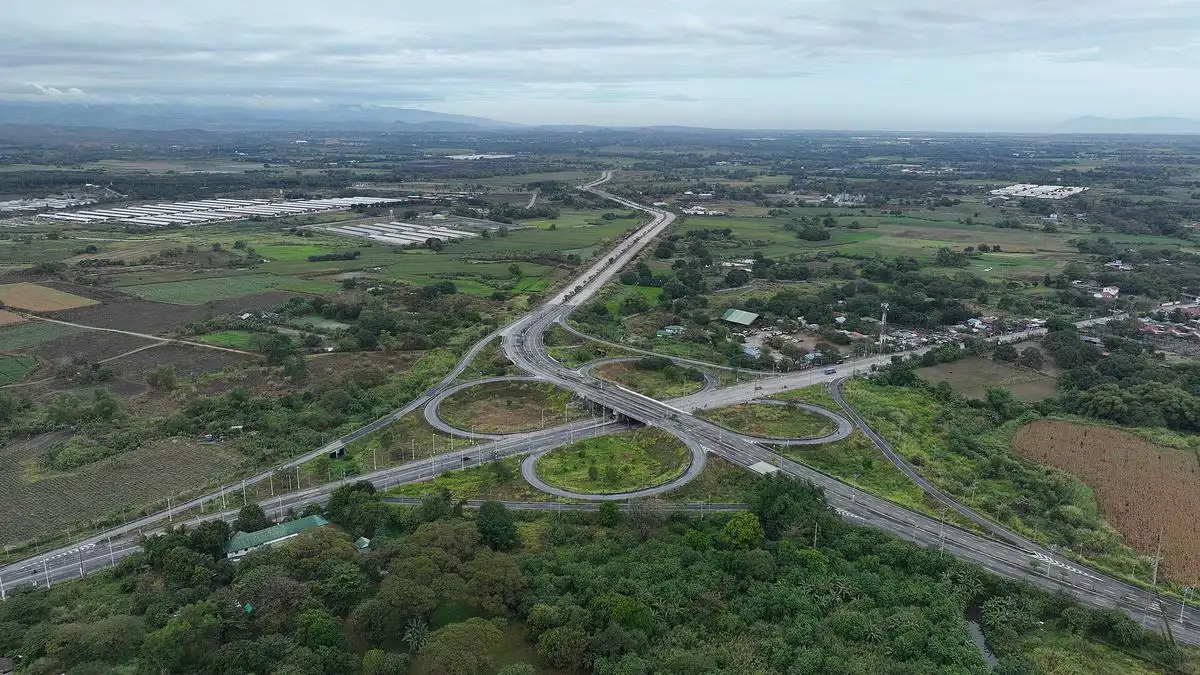
Aerial view of the MacArthur Highway–New Clark City interchange, surrounded by farmland.
The MacArthur Highway–New Clark City interchange at Cutcut, Capas. Stand-in photograph.Patrickroque01 · CC BY-SA 4.0

Why is the United States pushing for Pax Silica?

Through Pax Silica, the United States wants to organize the global AI supply chain aligned to its own specific interests and agenda — an “America First” initiative, to compete against China’s near monopoly in critical chokepoints in the AI supply chain. Instead of multilateral and free trade, business and development of the supply chains for artificial intelligence, their supply chain will now be controlled and dictated by an interdependent relationship of Pax Silica’s member countries to the US.

Read more · 2 paragraphs

The United States sees China as its primary competitor in the economic, technological, and military dimensions of artificial intelligence. China is the world’s second-largest research and design spender, occupies around 60% global rare-earth mining and 90% global rare-earth processing. As it stands today, the US has to import much of its rare-earth minerals from China.

With China’s growing geopolitical power and the United States itself forced to be dependent on their competitor’s imports, this dependence creates a strategic vulnerability for the US and its allies because the AI industry relies on many of the same supply nodes that China has come to dominate.

China's grip on rare earths
Mining
60%
Processing
90%

China's share of global rare-earth production and processing.

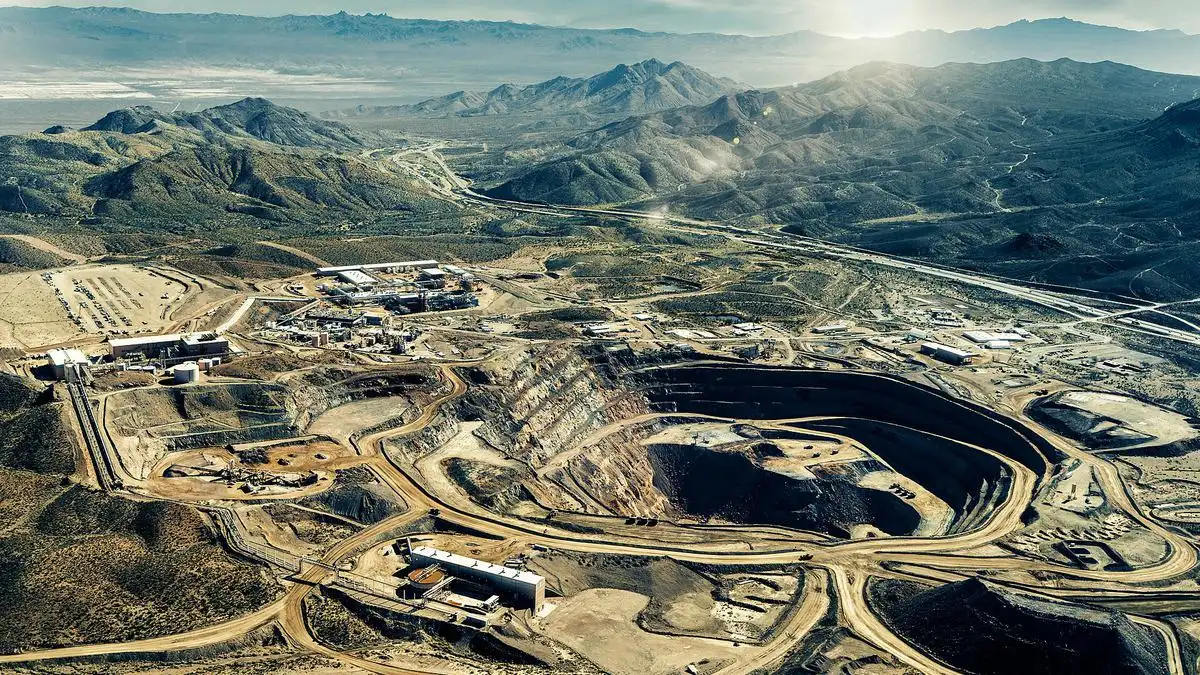
An open-pit rare-earth mine, with a deep pit and processing buildings beside it.
A rare-earth open-pit mine in California, for illustration only. Stand-in photograph.Tmy350 · CC BY-SA 4.0

Why is Marcos Jr. supporting Pax Silica?

Philippine President Marcos Jr. and US Secretary of War Pete Hegseth

The Philippines is rich in natural resources — particularly minerals such as nickel, cobalt, and copper. In 2024, the Philippines was the world’s second-largest producer of nickel, accounting for 9.5% of global production and exports most of it to China for processing and refinement. The United States is keen on seizing the Philippines away from China as their own source of critical minerals for US production of data centers, electronics, and semiconductors.

Read more · 3 paragraphs

Marcos Jr. presses for the need for the Philippines to move upward the supply chain from just being a resource extraction node — he says that Pax Silica aims to industrialize the Philippines. Seeking to please capitalist investors and the US, Marcos Jr. also seeks to reinforce the Philippines-US strategic relationship by allowing the US to use Filipino land to outpace China in the AI race.

However, selling our critical minerals to the United States instead of selling it to China won’t automatically leave us better off and produce any real industrialization. Behind the veil of “development,” Pax Silica represents the further integration of the Philippines into the US-led economic and geopolitical bloc. Rather than breaking away and forging our own path to development, the Philippines simply becomes more dependent on the whims of the global market and subject to the wholesale extraction of our people’s land, labor, and environment.

If we are to take Marcos Jr.’s word on Pax Silica being our means to develop — we ask: development for whom?

The promise, and the record

Hundreds of thousands of jobs

No public document guarantees it.

Almost a hundred billion dollars

Booked abroad, spent abroad.

A step up the supply chain

Ownership, patents and fabs stay foreign.

Development for whom?

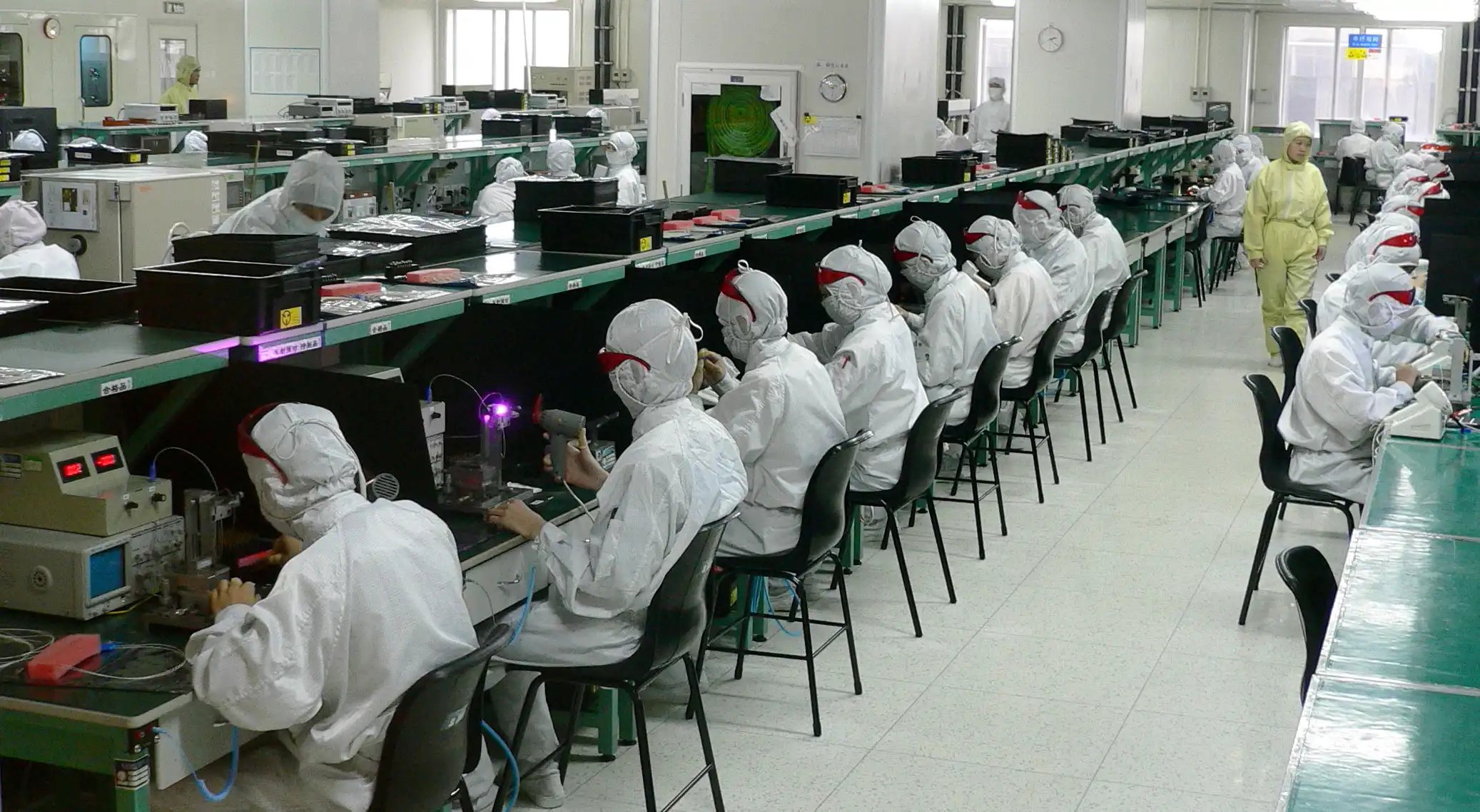
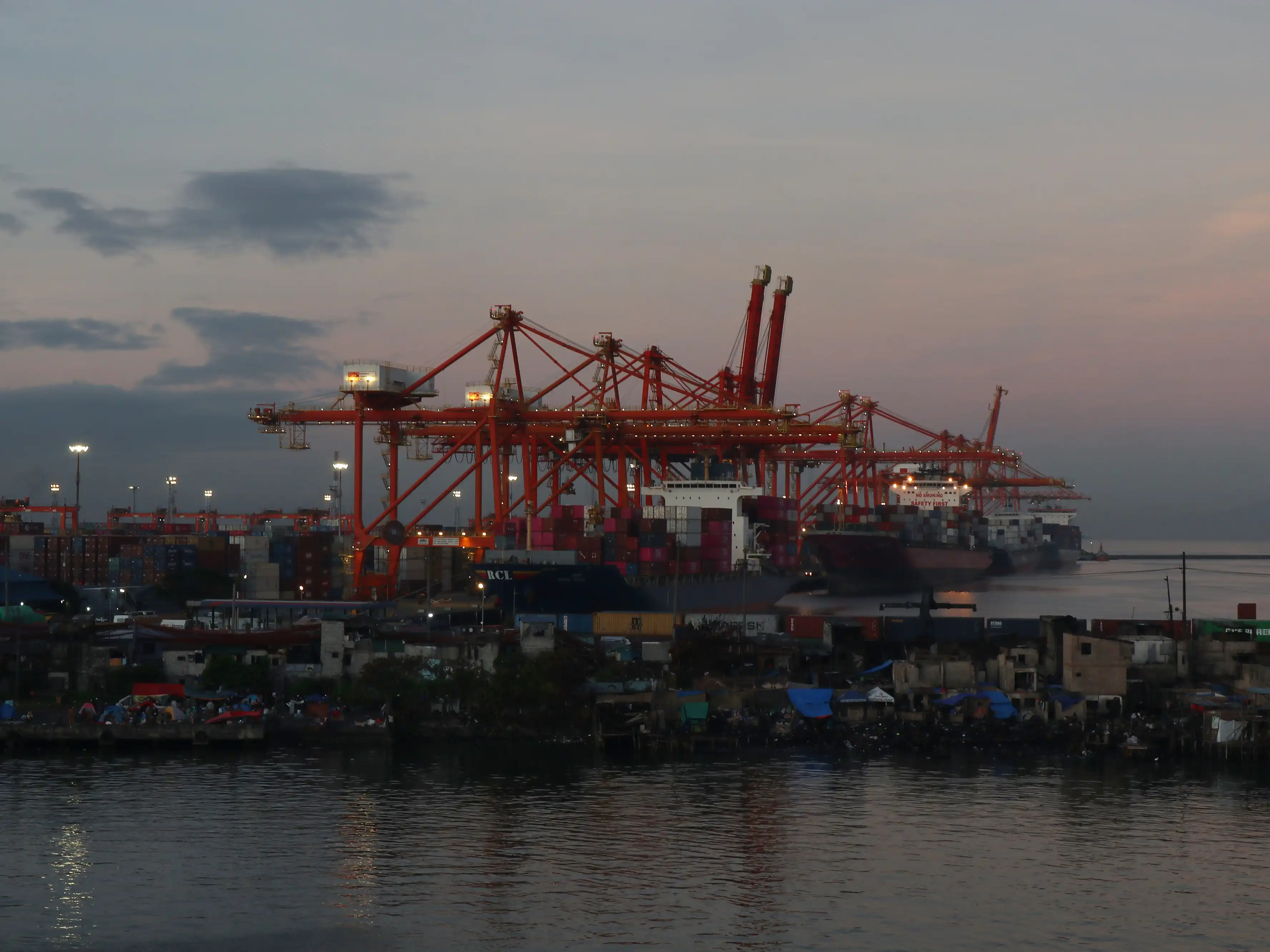
Photograph: Steve Jurvetson (CC BY 2.0)Patrickroque01 (CC BY-SA 4.0)Aileen Devlin / Jefferson Lab (Public domain)Rhododendrites (CC BY-SA 4.0)

What does Pax Silica promise?

Supporters of Pax Silica argue that the investment opportunity is simply something that must not be missed. Pax Silica is said to promise hundreds of thousands of jobs for Filipinos and nationwide industrialization that would upgrade the Philippines’ position in the worldwide semiconductor supply chain and make it a global competitor in technology. For the New Clark City hub, the BCDA projects US$40 - 70 billion in investment and almost 200,000 direct jobs.

Read more · 5 paragraphs

On BCDA’s claims of “thousands of jobs”

The headline numbers on how many jobs Pax Silica will bring to the Philippines is just a projection, not a promise — meaning that this is not a guaranteed outcome. Besides having no publicly released study on how these projections were justified, there is also no public document that contractually requires the foreign companies going here to provide the hundreds of thousands of jobs for Filipinos. They face no consequences if they fail to meet this target.

We should also question Pax Silica’s “AI-native” as the United States’ own direction in AI investments is notorious for causing laying worker layoffs, not producing more jobs as we can see in massive layoffs even in more developed countries.

On Labor Rights and Job Quality

Equally important to how many jobs is the workers’ rights and job quality that comes with the work that Pax Silica brings. Contractualization and chronically low wages remain the biggest issues Filipino workers face. If Pax Silica brings jobs into the country under the same broken Philippine labor system, we risk letting these foreign corporations take advantage of our systems to hire workers into temporary, contractual and inadequately paid labor. Without any publicly released document that explicitly protects workers’ right to unionization, collective bargaining, decent wages, regularization, and workplace safety — Pax Silica is bound to be just another phase of the long history of labor rights violations in the country brought by the export-oriented labor model.

On levelling up the Supply Chain and Technology Transfer

Moving up the global technology supply chains means we need to be able to secure technology that will be deployed in the Philippines to start producing on our own, instead of repeatedly importing from other countries. This requires a contract on technology transfer — passing on industry practices, tools and techniques to Filipino firms so that they can learn, adapt and own new kinds of technology.

Pax Silica fails to guarantee any form of technology transfer — foreign investment alone just means that foreign corporations can set up their factories in the Philippines, but Filipinos will own none of the technology. Ownership and control of the technology, intellectual property, and high-value segments of the supply chain can remain with foreign corporations, while the Philippines is left with lower-value industries. Historically, foreign investment has not automatically resulted in meaningful technology transfer or the development of domestic technological capacity. Thus, even with nearly a hundred billion dollars in foreign investment, we will remain underdeveloped and worse, we’ll depend much more on foreign capital and technology.

What are the possible effects of Pax Silica?

Despite the Philippine government not having any binding demands to the foreign corporations going into the Philippines, we are giving up a significant number of things for the Pax Silica initiative that can impact us in many different ways.

Read more · 5 paragraphs

Large-scale theft of the land of farmers and IP communities

Despite the repeated lies that there will be no affected communities echoed by the BCDA, in reality there are thousands of indigenous Aetas and farmers that Pax Silica plans to displace in Capas, Tarlac. The BCDA claims to have given out up to 15,000 hectares of land for Aetas and 10,000 hectares of land for farmers, but even the BCDA admits that a large part of this land they promised have already been given out to private developers as part of New Clark City.

There is also a pending application for a Certificate of Ancestral Domain to the National Commission on Indigenous Peoples filed by the indigenous Aetas fighting for their right to their own ancestral lands. Based on the most recent data, there are an estimated 20,000 indigenous Aetas and 15,000 farmers that rely on and work on the land seized by New Clark City. For the BCDA, there are no communities and farmers affected by Pax Silica because they don’t want to recognize their right to their own land in the New Clark City area.

Damage to our environment

Pax Silica is also expected to expand and grow the number of huge and destructive mines in the Philippines. The BCDA likes to say that their industrial zone will have zero mining operations, but the Philippines’ explicit primary role in Pax Silica is to provide the raw materials for processing. The US is already funding the expansion of new mining areas outside of Capas, Tarlac for Pax Silica.

Massive extraction of water and electricity

In the face of water inaccessibility and the impending drought brought on by El Nino, the Pax Silica project is being pushed despite risking Filipinos’ water supplies. Even if the BCDA has stated that there will be no more data centers being built in Capas, Tarlac, it states that it still needs up to 90 million liters of water daily to sustain its operations. This is equivalent to the water consumption rate of 600,000 to 900,000 Filipinos. Until now, there are still about 40 million Filipinos without access to clean and potable water. Why prioritize Pax Silica over them?

The BCDA also states that when their industrial zone is fully operational, they’ll need 3 gigawatts of energy to power everything. This is more than double the capacity of the largest conventional operating plant in the country today. An industrial zone that needs this much energy will definitely strain the Philippine electrical grid, which has already been plagued with chronic electricity blackouts and one of the highest prices in Southeast Asia. The government is ready to set up power plants just for Pax Silica, but is ignoring the energy crisis that ordinary Filipino citizens are facing.

Land: how many hectares, really?
CapasBambanAyta claim17,000 haNew Clark City9,450 haPax Silica hub1,620 haCapas National Shrine5 kmN

Capas and Bamban and the rivers are mapped (OpenStreetMap). New Clark City, the hub and the Ayta claim are approximate outlines scaled to their stated areas — the right size, roughly the right shape, not a survey.

Compare Pax Silica!

How big is Pax Silica's 1,620-hectare footprint? Choose a landmark below to visualize how many instances fit inside the planned AI hub.

Pax Silica (1,620 ha)
Pax Silica BCDA 3D architectural rendering
1,620 haFootprint

Pax Silica (Capas Master Plan)

≈ 441.42×instances in 1,620 ha

Philippine Arena (3.67 ha)

Pax Silica can fit almost 450 Philippine arenas within its boundaries!

Where does each sector stand?

Each sector's own position, in the words of its organisation. Final wording is still pending from each group.

Computer professionals

Computer Professionals' Union

We know how the technology is built, and we know what it is used for. We refuse to be a tool of surveillance and war. AI and data centers need public oversight, and tech workers need the right to refuse dangerous projects.

Scientists

AGHAM

Science is for the people. Pax Silica is not scientific progress — it is the extraction of minerals and energy for another country’s interests. We need independent research, public control of technology, and science that answers to what Filipinos actually need.

Engineers

PROPEL

We are engineers, and we know how to build the infrastructure this country needs. But this project is built for another country’s supply chain, not for the needs of our people. We need engineering that serves local industry and agriculture.

Environmental

KALIKASAN–PNE

These 1,620 hectares are farmland and home to the Ayta. Hyperscale data centers would drain water and power from an area that does not have enough to begin with. There is no just transition that begins by removing a community from its land.

Indigenous peoples

NNARRA Youth · KATRIBU

For indigenous peoples, land is life. There was never any Free, Prior and Informed Consent. We will not accept the loss of our ancestral domain for a project we did not choose and do not need.

BPO workers

BIEN

We work with technology every day. Unregulated AI threatens our jobs, our wages, and workers’ rights. What we need is decent work and a voice in the decision — not just a lower operating cost.

How is the United States using AI?

Above: US President Donald Trump From left to right: Secretary of War Pete Hegseth, xAI CEO Elon Musk, Palantir CEO Alex Karp, and OpenAI CEO Sam Altman

Given the United States’ role in leading the Pax Silica initiative, member-countries signing on to Pax Silica are conceding to helping the US make the kinds of artificial intelligence that the US wants to make. In just the last few years since the rapid development of artificial intelligence, the US has not prioritized the kinds of AI technology that people need the most and instead has largely focused on developing artificial intelligence for mass surveillance and war technology. This is clear to see when we look at the kinds of AI technology the US is actively funding.

Read more · 4 paragraphs

Surveillance technology

Surveillance technology funded by US state departments is building an unregulated corporate police state because of dangerous mass surveillance tools being used against everyday citizens. Flock cameras are costing local governments and police departments in the US hundreds of thousands of dollars from the government to track and surveil every civilian even without reasonable suspicion of wrongdoing. US domestic law enforcement and national security agencies like ICE use Palantir’s Clearview AI, which scraped tens of billions of images from social media without consent to make a facial recognition database to identify anyone based on anyone’s photo — a dangerous tool to track down and identify anyone they want to.

Autonomous weapons for war

The US Department of War has itself directed tens of billions of dollars into developing their own forms of artificial intelligence: specifically autonomous weapons of war. They are actively pursuing R&D development on autonomous combat and surveillance systems, advanced big data technology for command and control, and other optimization tech specifically for improving how they wage their military campaigns around the world.


Trump is actively pushing for the unhindered development and growth of artificial intelligence despite all the concerns: no clear use case that benefits ordinary citizens, resource scarcity that drives up the prices of not only technology, but all commodities. It is clear to see that any form of artificial intelligence that the United States funds and produces is technology that only serves to assert and maintain US imperialist dominance — not only against their own citizens, but also against many different countries around the world.

If not Pax Silica, then what?

Contrary to the claim of the US-Marcos regime, Pax Silica is not the only way to industrialize the Philippines. There is a way for the Filipino people to reap the benefits of Pax Silica without entrenching ourselves in the US War Machine and the geopolitical rivalry between Washington and Beijing — national industrialization and genuine agrarian reform.

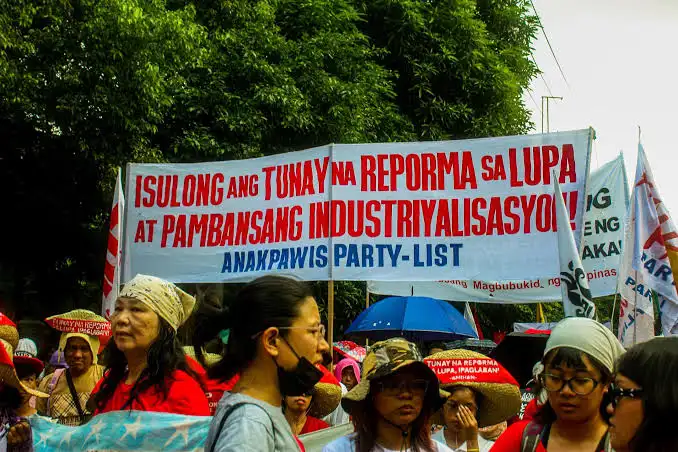
Protesters holding a banner reading 'Isulong ang Tunay na Reporma sa Lupa at Pambansang Industriyalisasyon! - Anakpawis Party-List'.

In short, National Industrialization and Genuine Land Reform are the solutions to the most longstanding problems confronting the Filipino people.

National Industrialization means developing and nationalizing industries such as steel manufacturing, machinery production, and the processing of the abundant raw materials found in our country. It would also provide employment to millions of underemployed and unemployed Filipinos, so that they would no longer have to seek work abroad just to provide for their families.

Genuine Land Reform, meanwhile, means dismantling the monopoly of large landlords over vast agricultural estates and distributing these lands freely to the farmers who actually till them, many of whom remain trapped in debt to their landlords just to make a living. The backward state of our agriculture is the root cause of food insecurity and our dependence on importing tons of rice, despite the vast areas of land devoted to rice cultivation.

Ordinary Filipinos and professionals from various fields are more than capable of pursuing the path of National Industrialization and Genuine Land Reform. Yet, for far too long, our politicians have given greater consideration to the demands and interests of foreign powers. This is also the development model that today’s most powerful countries, such as China, the United States, and various European nations, have followed. What we need is to adapt this model to the particular conditions and circumstances of our own country.

Read more · 5 paragraphs

National Industrialization

National Industrialization means building Philippine-owned productive capacity, from basic industries, manufacturing, and rural industries, so the country produces more of what it consumes rather than relying mainly on raw-material exports and imported finished goods. National industrialization means using the country’s natural resources and labor for the construction of a domestic industry with strategic sectors such as agriculture, oil, mining, heavy metal, technology, and others under public or national control in the interest of the people.

Genuine Agrarian Reform

Genuine Agrarian Reform calls for free distribution of agricultural land to landless tillers, the abolition of landlord control, and support for farmers to become productive producers. It can range from a minimum program of lowering land rent and interest rates, reduced farm-input prices, higher farm wages, and cooperative farming; its maximum program can be up to free land distribution to landless peasants.

Put together, National Industrialization and Genuine Agrarian Reform is an alternative to Pax Silica because it offers a domestically rooted, land-and-labor centered development strategy rather than integration into a US-led, AI-and-semiconductor supply-chain bloc. Pax Silica seeks to secure allied supply chains for chips, minerals, energy, AI infrastructure, and advanced manufacturing while National Industrialization and Genuine Agrarian Reform focuses on the basic and immediate needs of the Filipino people such as food sovereignty, land redistribution, economic self-sufficiency, domestic industry, and the economic backbone to assert our sovereignty against superpowers such as the US and China.

Technology for the People!

The Filipino people do not have to settle for advanced technology that steals huge amounts of land, water and electricity. We do not have to use the same artificial intelligence models that routinely take jobs away from workers around the world. The largest tech corporations in the world take advantage of technology in order to manipulate and profit off of users around the world, while hoarding the advancements that they make and making sure the people cannot own it, learn from it and create their own technology fit for our needs.

The enemy is not the technology, but who controls and gets to dictate the technology and what it’s used for. It is clear that the United States wants to continue developing artificial intelligence and other forms of advanced technology for the sole purpose of establishing its dominance on other countries. We demand for technology that is owned by and controlled by the people, where we can focus our time and resources on developing the kinds of technology that people urgently and genuinely need.

What can we do?

Akbayan seeks House probe into PH's Pax Silica deal with US
Image source

There is widespread criticism on Pax Silica: on the government’s transparency to the Filipino people, to the large-scale theft of land from farmers and indigenous peoples, and on how our government is practically giving away our water, energy, electricity and critical minerals. Representatives from many different sectors are speaking out against Pax Silica, including professionals, scientists and environmentalists, academicians, businesses and many others.

We should amplify and expand the collective anti-imperialist struggle of all progressive and national democratic organizations that reject Pax Silica. There is no better opportunity than through Pax Silica’s initiative to expose the oppressive and exploitative relationship between the Philippines and the United States, and how the Marcos Jr. administration willingly sells the country’s land, resources and people to serve US interests. Pax Silica can be clearly connected with the wars waged by the US against Iran, Venezuela, Palestine and many other countries around the world.

Negotiations are still on-going but they plan on signing this initiative soon — as long as we urgently increase our numbers and make our calls louder, we will push the government to submit to the people’s demands. We can see how they have already conceded on our calls about communities at risk of being displaced, or whether data centers will be set up. We should link up with organizations, and organize within our own communities against Pax Silica.

Fighting against Pax Silica and against the imperialist US state does not mean we are against progress or industrialization, nor does it mean we are siding with any other foreign state. Fighting against Pax Silica means demanding a better path towards genuine national industrialization, and a more inclusive policy that uses modern and advanced forms of technology for our own national needs and production.

April 2026

16

Thursday

2026

The Philippines joins Pax Silica as its 13th member.

August 2026

31

Monday

2026

The Network Opposed to Pax Silica is launched in Quezon City.

October 2026

14

Wednesday

2026

Bangkok forum, “Shut the Pax Down”, with Philippine and international groups.

November 2026

9

Monday

2026

This pamphlet launches. Share it with classmates, coworkers, and communities.

November 2026

16

Monday

2026

The final Pax Silica master agreement is expected to be signed — the day Donald Trump visits the Philippines for the ASEAN Summit in Metro Manila.

Join the Computer Professionals' Union

Computer Professionals' Union

The Computer Professionals’ Union is open to developers, IT workers, students, and teachers who believe technology should serve the people.

Allied organizations

Agham

Agham

Bagong Alyansang Makabayan

Bagong Alyansang Makabayan

BPO Industry Employees’ Network

BPO Industry Employees’ Network

Katribu

Katribu

Kalikasan

Kalikasan

Network Opposed to Pax Silica

Network Opposed to Pax Silica

Pro-People Engineers and Leaders

Pro-People Engineers and Leaders

Join the CPU!

If you're a computer professional, IT student, or developer, there's a place for you here.

Computer Professionals' Union